Melbourne Below Ground: The Metro Tunnel Project
Around the end of last year one of Melbourne’s biggest infrastructure projects was completed. A new underground rail line linking the north west to the south east. After nearly ten years of construction, four new stations in the CBD finally opened to the public.
I’ve been following this project since the beginning. Back then I was working in the city, so I could witness the changes as they unfolded. Parts of the CBD were closed. Others were altered in ways that will likely stay for decades. Streets shifted. Footpaths narrowed. Familiar corners disappeared.
I’ve been genuinely curious for years about what these new stations would feel like once they were finished. Over the past few months I tried contacting the City of Melbourne to see if I could gain access and document them properly, but no response ever came.
So at the end of January I decided to go anyway. Camera in hand and a half-prepared excuse in case anyone, especially police, asked why I was photographing train stations.
On the last Saturday of January I found myself on a train to the CBD. No special access. Just time. Time to walk, observe and see what ten years of work looked like from the inside.
The feeling was mixed but good.
Arden and State Library immediately felt significant. There is a sense of scale in both that feels intentional, almost civic in nature. What anchors them, though, is the presence of major commissioned artworks integrated into their facades.
At the Library, I saw Forever by Danie Mellor, large portraits of Wurundjeri Woi-Wurrung women drawn from the State Library archives and layered with contemporary landscapes from Country. The work carries historical weight. It feels reflective, almost archival, acknowledging the ongoing cultural presence of Victoria’s First Peoples.
At Arden, I saw Come Together by Abdul Abdullah, two large hands almost touching across a mosaic surface. The gesture feels more symbolic than historical. It speaks about connection, unity and communities meeting in a changing precinct. A quiet moment held in a large piece of infrastructure. That detail stayed with me. It felt intentional. Grounded.
The other two read differently.
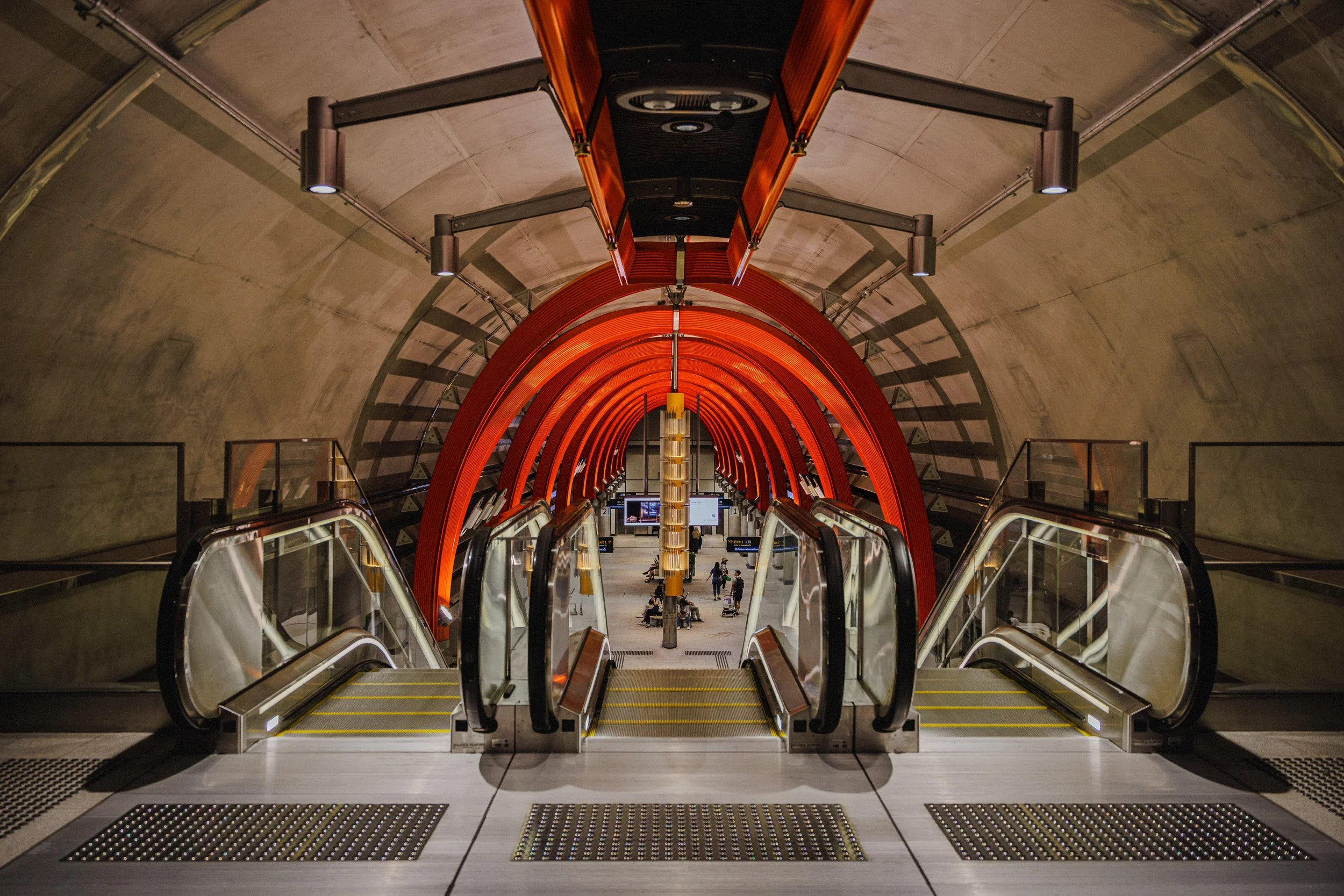
Parkville on the surface feels almost ordinary. Nothing dramatic at first glance. But once you take the escalators down, you realise how deep they dug. The scale reveals itself slowly. It becomes less about design and more about engineering ambition. You start to understand the magnitude of what sits beneath your feet.
Anzac had a similar sense of amplitude below ground. Wide spaces. Tall volumes. A certain calm. On the surface I only caught glimpses before the rain started. From what I could see, and from images I had seen before, the roof form almost resembles a surfboard resting along St Kilda Road. It feels like one of those stations best understood from above, where the sweeping form and warm toned materials can be fully appreciated within the civic context. Unfortunately the rain cut that visit short. I could not fly the drone, which is how I think the structure truly reveals itself. So that station feels slightly unfinished in my mind, like I still owe it a proper visit.
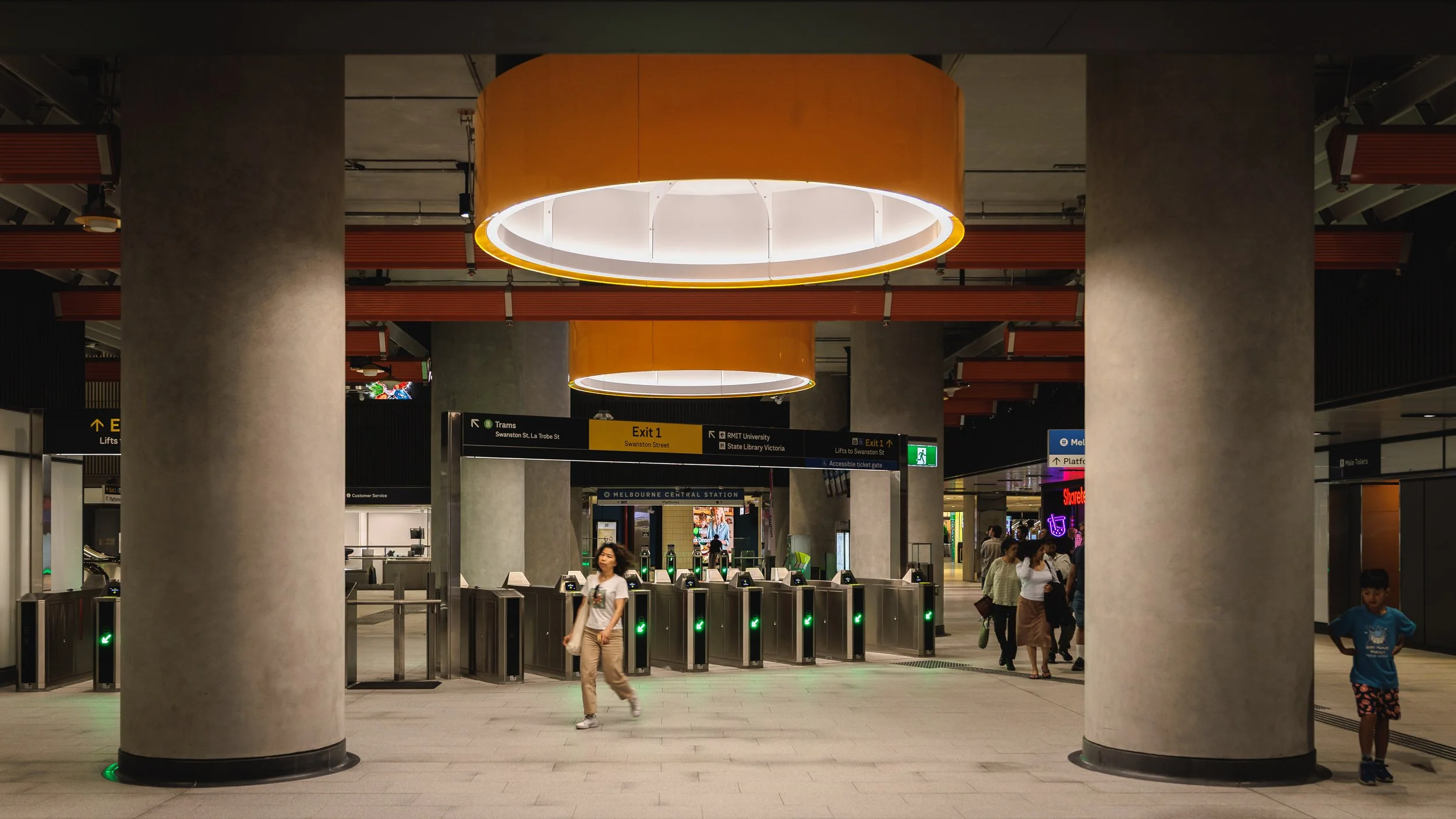
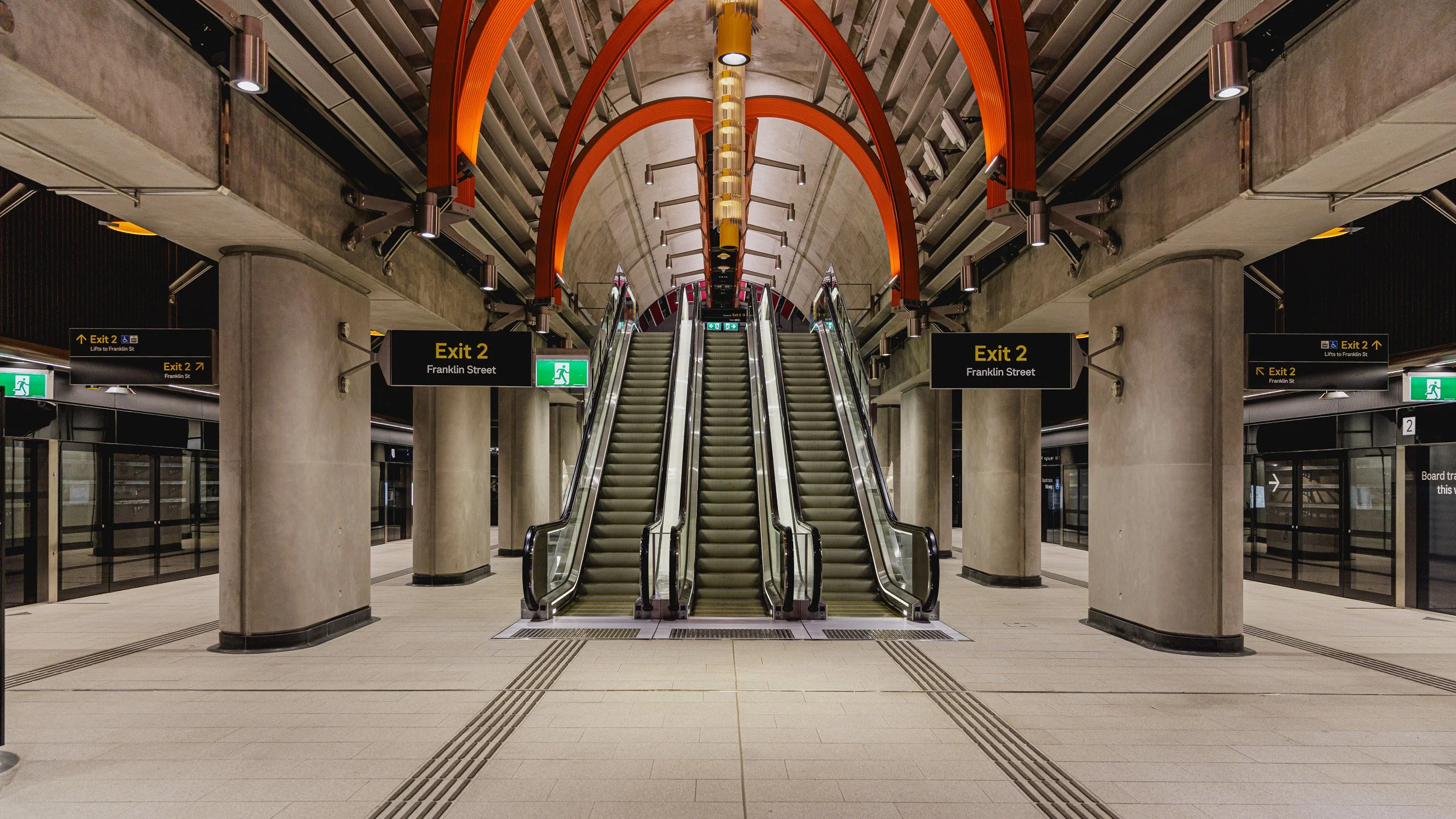
What really drew my attention across all four stations was the shared language between them. That alone makes them very different from the City Loop.
In the City Loop, each station feels like its own world. Different materials. Different colours. Different moods. They carry the identity of the era in which they were built. Expressive. Sometimes bold. Sometimes almost theatrical. That individuality is what makes them memorable.
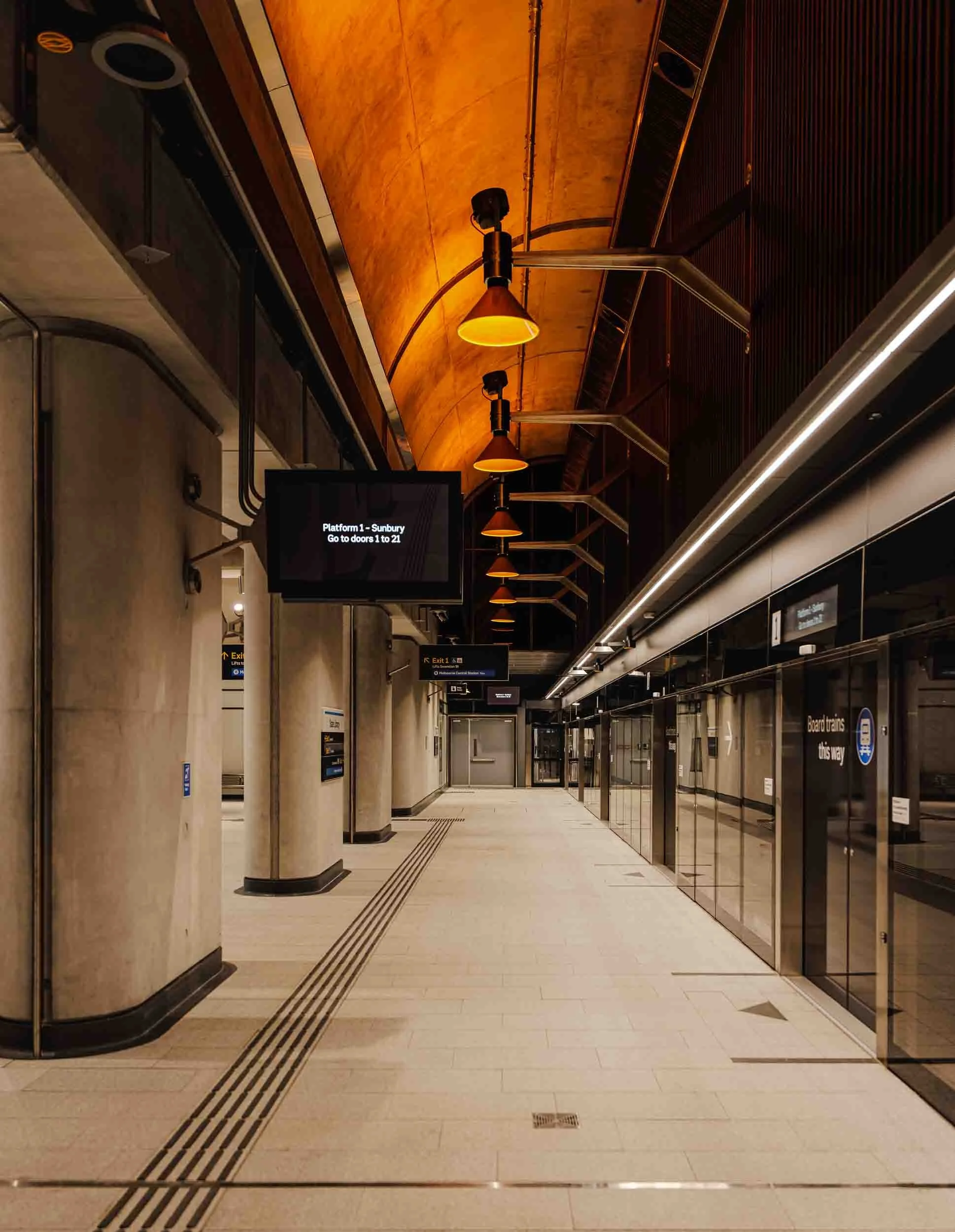
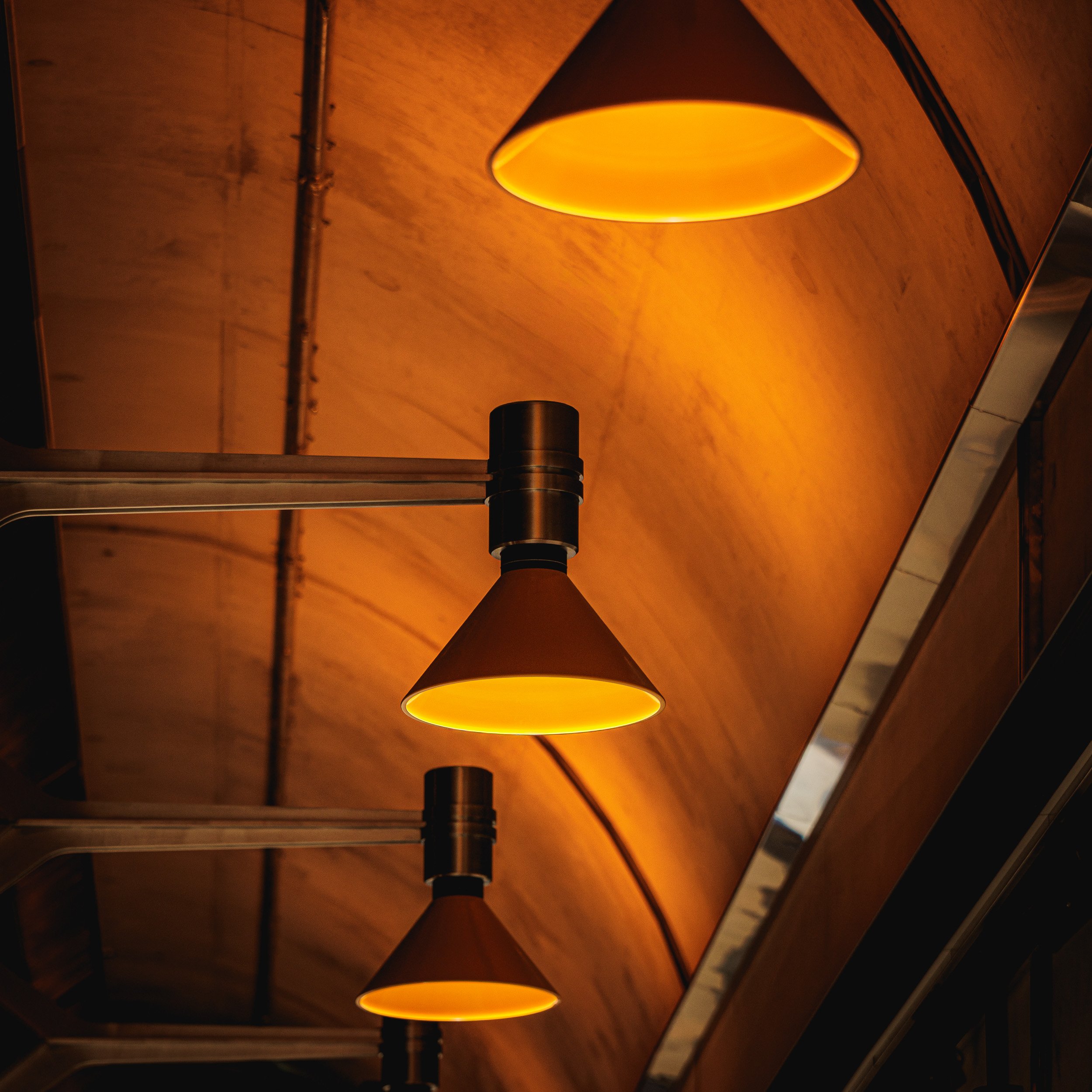
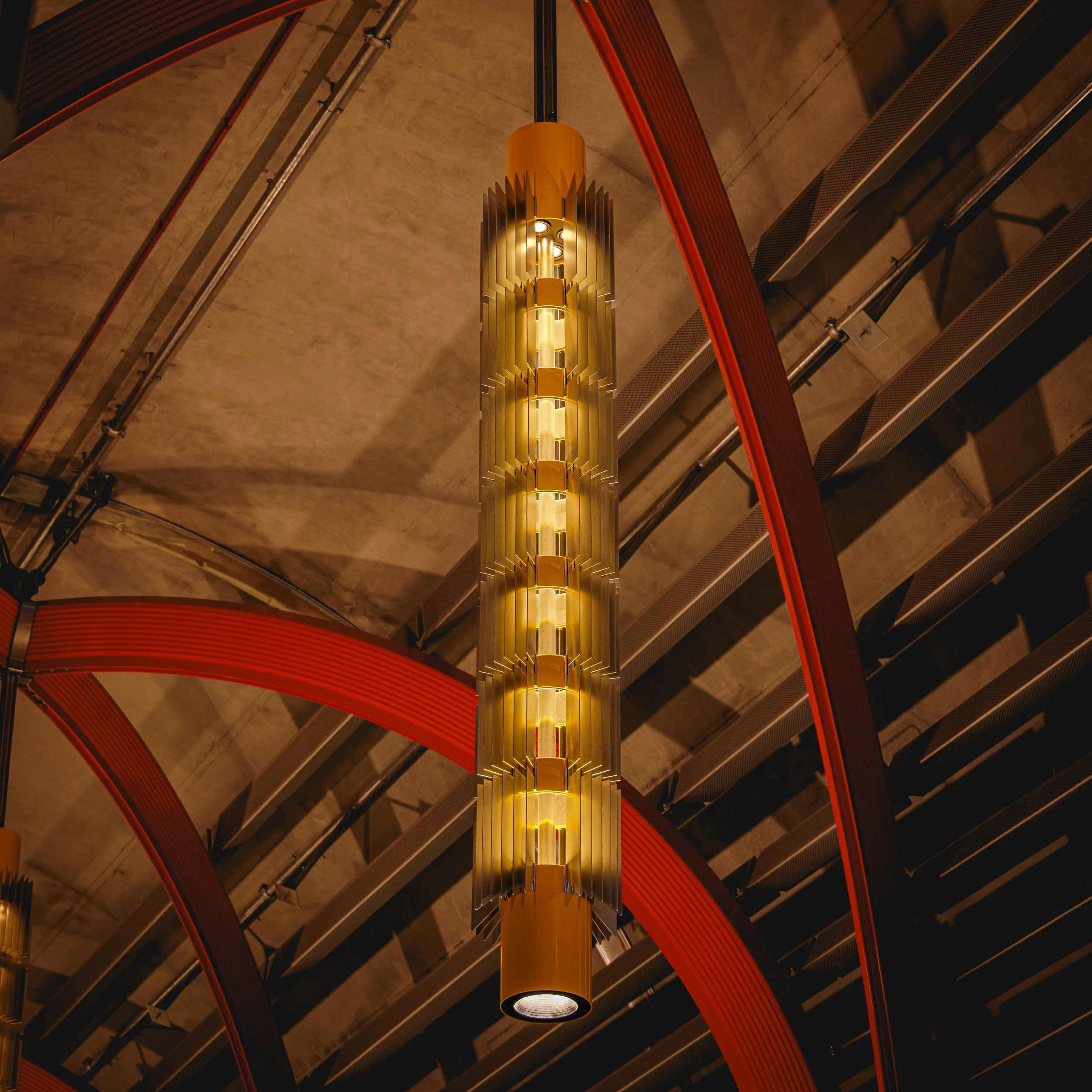
The Metro Tunnel feels more unified. The visual language carries through all four stations. Materials repeat. Lines feel intentional. The lighting and finishes speak the same dialect. It feels contemporary, but with subtle vintage undertones. Clean and restrained, yet not cold.
It made me think about time.
The City Loop belongs to a moment when infrastructure could afford to be expressive in fragments. Each station standing on its own.
This new project feels like it belongs to a different philosophy. More cohesive. More system driven. Less about individual character, more about shared identity. As if the city today prefers continuity over contrast.
And yet above ground, each station still carries a distinct presence. Different forms. Different relationships with the street. But once you descend, the language becomes consistent. Disciplined. Calm.
There isn’t much more to explain beyond that.
Some things are better seen than described.
Here are a few of the frames I captured. I have more waiting for post production, which I’ll share soon.